Your Data's Double Life

Client
Your Data's Double Life
Services
Creative Direction
Campaign
Year
2025
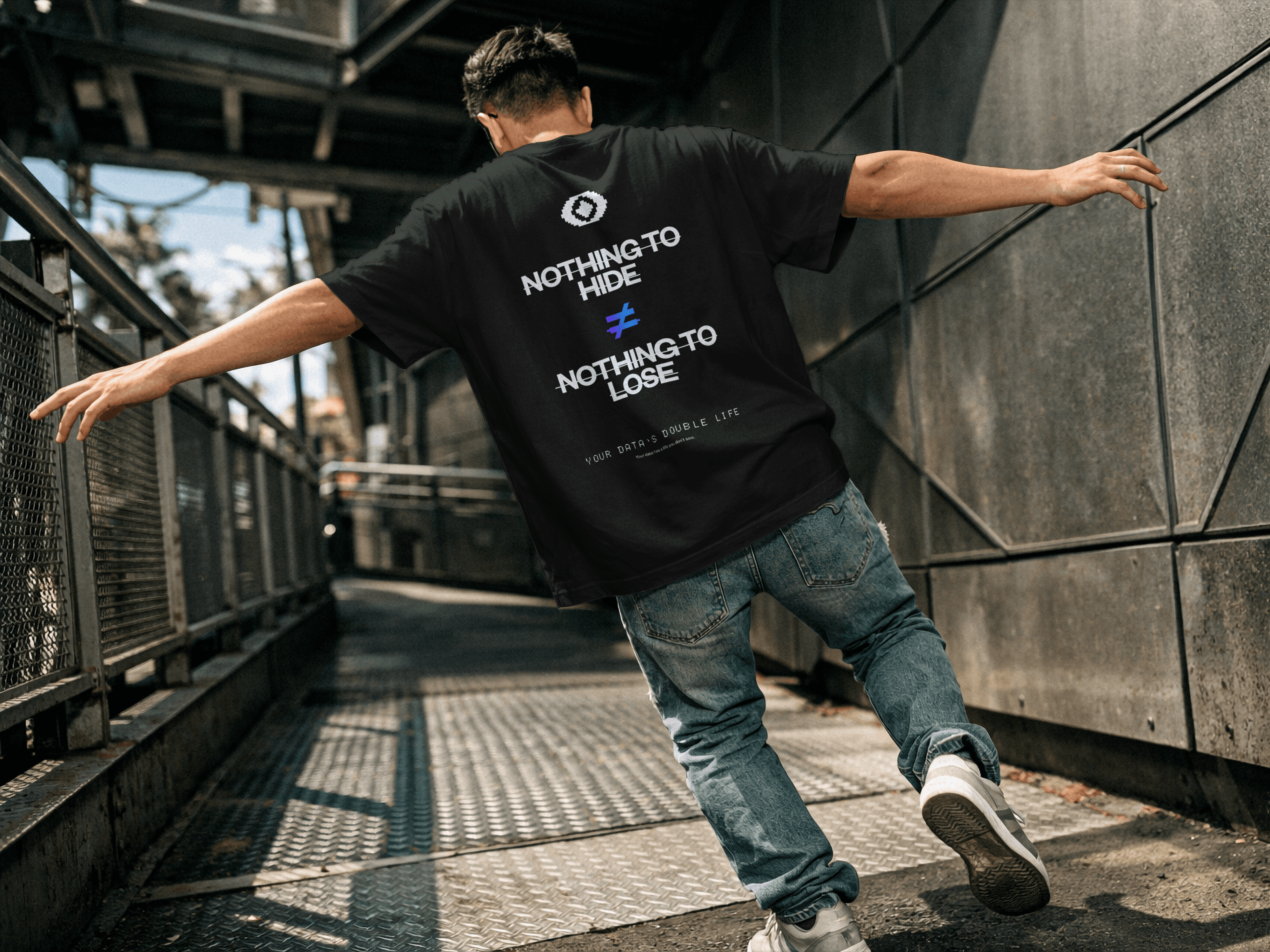
Most people think they're in control of their privacy - they've adjusted their settings, they don't share "sensitive" stuff, they've got nothing to hide. But that belief doesn't hold up against how AI actually works. Systems don't just collect what you hand over, they infer, reconstruct, and build profiles from behaviour you didn't even realise was data. Your Data's Double Life is a counterculture campaign built to expose that gap between perceived control and actual control, targeted specifically at people who assume they're "careful enough" or too unremarkable to be worth tracking - because that complacency is exactly what makes them the most exposed. The campaign runs across three touchpoints that build on each other. OOH and social media come first - posters, lightrail ads, and short-form video that simulate personalised-style tracking to make people uneasy before they even know why. That leads into the centrepiece: an immersive branded experience designed as a five-phase emotional arc, from curious-but-sceptical to fully unsettled. Visitors register through intentionally verbose T&Cs nobody actually reads, get a wristband at entry, and trade a scan for a "free" drink at the Data Exchange Bar - a deliberately low-stakes first crack in the illusion of control. From there it escalates: a Watching Room where eyes appear on screens as they move, a phone that "detects" 27 apps listening, and the peak moment in the Algorithm Control Lab, where inferred attributes get overlaid onto their own reflection - age, mood, behaviour, 89% accuracy. It's staged, but it's built to feel exactly like what's already happening on their phone. The exit is where the campaign does its real work. Visitors leave with a thermal-printed "data report," a zine, and merch - tangible things that carry the message past the event itself. The whole journey is mapped against a real persona (someone like Mia, 24, retail worker, "I know apps collect data but I don't really have anything to hide") who goes from mild curiosity to genuinely questioning her habits by the next day. That's the shift the campaign is chasing: not fear for fear's sake, but the specific, personal realisation that "nothing to hide" was never really the point.